If you want to build muscle, one of the biggest questions is how many sets per muscle group per week you should do. More training does not automatically mean more growth. Your muscles need enough work to create a useful training stimulus, but they also need enough time to recover.
Why Weekly Sets Matter for Muscle Growth
A training set gives your muscles a reason to adapt. Over the course of a week, those sets add up to your total training volume. Too little volume may not provide enough stimulus, while too much can make recovery difficult.
How Many Sets Should You Do Per Muscle Group?
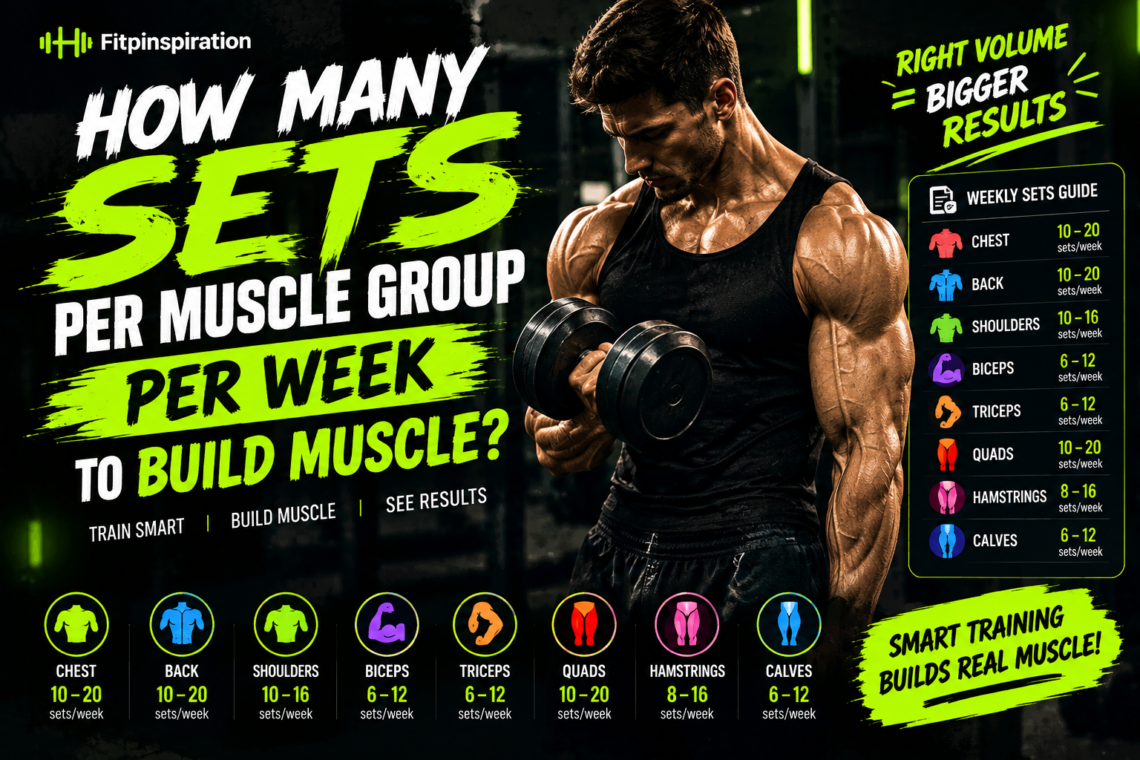
There is no single number that works perfectly for everyone. However, the ranges shown in the infographic provide a useful starting point:
- Chest: 10–20 sets per week
- Back: 10–20 sets per week
- Shoulders: 10–16 sets per week
- Biceps: 6–12 sets per week
- Triceps: 6–12 sets per week
- Quads: 10–20 sets per week
- Hamstrings: 8–16 sets per week
- Calves: 6–12 sets per week
Chest and Back Training Volume
Chest and back are large muscle groups, so they can benefit from several exercises throughout the week.
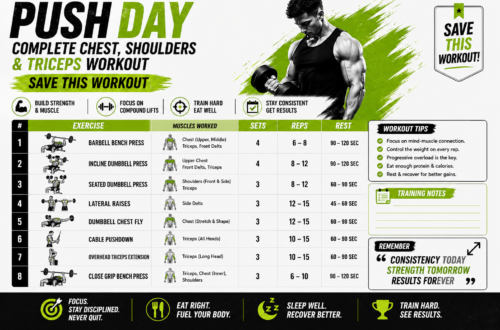
For your chest, exercises such as the barbell bench press, incline dumbbell press, and chest fly can provide useful training volume. Try to combine compound movements with controlled isolation exercises.
For your back, use a combination of vertical pulling and rowing movements. Pull-ups, lat pulldowns, barbell rows, and cable rows are examples that can help develop a stronger and more balanced back.
Shoulders and Arms
Your shoulders can be trained through pressing movements as well as exercises such as lateral raises. The suggested range of 10 to 16 sets per week can be divided between multiple workouts.
Your biceps and triceps also receive indirect work during pulling and pressing exercises. Because of this, you may not need as much direct arm volume as you might expect.
A range of 6 to 12 direct sets per week can be a practical starting point for both biceps and triceps.
Quads, Hamstrings, and Calves
Lower-body training should include movements that target the major muscles of your legs.
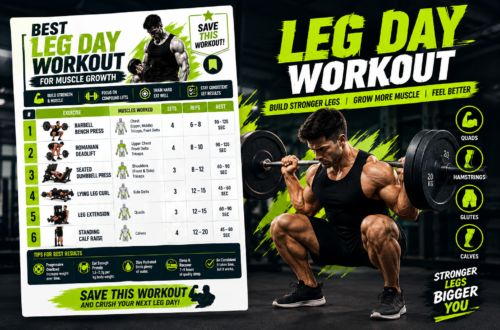
Squats, leg presses, and lunges are useful choices for training your quads. For your hamstrings, Romanian deadlifts, leg curls, and other hip-hinge movements can provide effective training.
Calf raises can be used for direct calf work. Start with a manageable number of sets and gradually increase the workload if you are recovering well and continuing to progress.
How to Divide Your Weekly Sets
You do not have to complete all your weekly sets for one muscle in a single workout.
For example, if your target is 12 chest sets per week, you could perform six sets during one workout and another six sets later in the week. This can make your sessions more manageable and help you maintain good performance.
The same strategy can be used for your back, legs, shoulders, and arms.
Pay Attention to Recovery
Recovery is an important part of building muscle. Your sleep, nutrition, hydration, stress levels, and rest days all affect how much training you can handle.
If your performance consistently decreases or you feel unusually tired, consider reducing your training volume for a while.
Final Thoughts
The best sets per muscle group per week is the amount that gives you enough training stimulus while still allowing your body to recover and improve.