Strong forearms don’t happen by accident. They come from training the muscles most people skip while they chase bigger biceps and broader shoulders. Yet your forearms are working in almost every pulling, pressing, and carrying movement you do — so neglecting them is one of the fastest ways to hit a plateau in your grip strength and overall lifting performance.
If you’ve ever struggled to finish a heavy set of deadlifts because your grip gave out before your back did, this one’s for you. Below are five proven forearm exercises that build thickness, strength, and grip endurance — the same five featured in the pin that brought you here.
Why Forearm Training Matters
Your forearms control your grip, and your grip is the connection point between you and every barbell, dumbbell, pull-up bar, or farmer’s handle you touch. Weak forearms limit how much weight you can lift, how long you can hold onto the bar, and how stable your wrists stay under load. Training them directly leads to:
- Stronger, more secure grip on heavy lifts
- Better performance in pulling and carrying movements
- Greater forearm and wrist stability, reducing injury risk
Now let’s break down the five exercises.
1. Reverse Curl
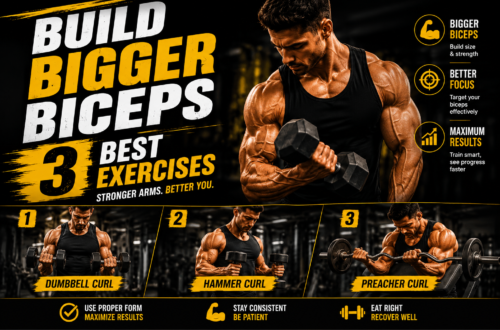
The reverse curl is performed like a standard bicep curl, but with an overhand (pronated) grip on the bar. This small change shifts the emphasis away from the biceps and onto the brachioradialis, the thick muscle that runs along the top of your forearm and gives it that dense, “forearm slab” look.
How it targets your forearms: It builds overall forearm thickness while also strengthening your grip on movements like rows and pull-ups.
Tip: Keep your elbows tucked and avoid swinging the weight — strict form is what makes this exercise effective.
2. Hammer Curl
The hammer curl uses a neutral grip (palms facing each other), hitting both the brachialis and brachioradialis. It’s a favorite among lifters because it builds forearm size while also adding thickness to the upper arm.
How it targets your forearms: The neutral grip trains your forearms through a slightly different angle than the reverse curl, making the two exercises complementary rather than redundant.
Tip: Control the negative (lowering) portion of the rep — that’s where much of the muscle-building tension happens.
3. Farmer Carry
The farmer carry is deceptively simple: pick up a heavy dumbbell or kettlebell in each hand and walk. But few exercises test — and build — total grip strength as effectively.
How it targets your forearms: Because you’re gripping a static weight through movement, the farmer carry recruits all the forearm muscles simultaneously, along with your shoulders, traps, and core for stability.
Tip: Choose a weight heavy enough that your grip is challenged well before your legs get tired.
4. Wrist Curl
The wrist curl isolates the muscles responsible for flexing your wrist. Rest your forearms on a bench with your wrists hanging off the edge, holding a barbell or dumbbells, and curl the weight upward using only your wrists.
How it targets your forearms: This exercise directly hits the wrist flexors, which are essential for grip strength and forearm size that’s often missed by curls and carries alone.
Tip: Use a lighter weight than you’d expect — this is a small-muscle, small-range movement, and going too heavy sacrifices range of motion.
5. Dead Hang
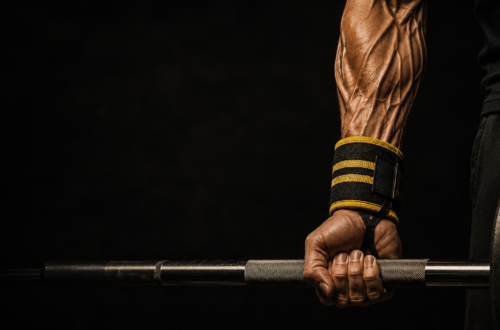
The dead hang is as basic as it gets: grab a pull-up bar and hang, letting your full bodyweight load your grip. It’s one of the most underrated forearm and grip builders in strength training.
How it targets your forearms: Beyond building raw grip strength and forearm endurance, the dead hang also improves shoulder stability and decompresses the spine — a two-for-one benefit.
Tip: Aim to build hang time gradually. Even 20–30 seconds under control is a great starting point for beginners.
How to Program These Exercises
For best results, don’t just do these exercises randomly — build them into a consistent routine:
- Sets: 3–4 sets per exercise
- Reps: 10–15 reps (or timed holds for carries and hangs)
- Frequency: Train forearms 2–3 times per week, allowing rest between sessions
- Progression: Track your weight, reps, or hang time weekly and aim to improve gradually
Because the forearms are made up of many small muscles that recover relatively quickly, they respond well to slightly higher training frequency than larger muscle groups — just don’t skip recovery altogether.
Final Thoughts
Building serious forearm strength isn’t about doing endless wrist curls — it’s about attacking the muscle group from multiple angles: curling, carrying, and hanging. The reverse curl and hammer curl build size, the farmer carry and dead hang build raw grip endurance, and the wrist curl fine-tunes wrist strength that ties it all together.
Add these five exercises into your routine consistently, track your progress, and you’ll notice the difference not just in how your forearms look, but in how much more weight you can confidently grip, carry, and lift.
Ready to get started? Pick two or three of these exercises to add to your next upper-body or pull day, and build up from there. Train hard, stay consistent, and get stronger — one grip at a time.